
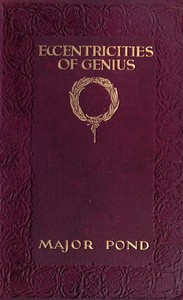
Eccentricities of genius : memories of famous men and women of the platform…
Imagine your job is to herd cats. Now, imagine those cats are the most brilliant, eccentric, and famous speakers of the 19th century, and you have to get them from city to city on time, in one piece, and ready to perform. That was James B. Pond's life. 'Eccentricities of Genius' is his firsthand account from the trenches of the lecture circuit.
The Story
There isn't a single plot, but a series of fantastic, behind-the-curtain stories. Pond takes us on the road with his stars. We see Mark Twain trying to skip out on a contract, only to be charmingly reeled back in. We witness the immense dignity of Frederick Douglass and the fiery determination of suffragists like Susan B. Anthony. We're there for the mishaps: blizzards that trap whole troupes, technical disasters, and the constant battle against bad food and worse travel. The 'story' is the daily drama of managing living legends, showing us not just their grand ideas, but their very human moments of frustration, generosity, and sheer oddity.
Why You Should Read It
I loved this book because it completely shatters the marble statue version of history. These aren't just names in a textbook; they're people who got grumpy, told jokes, and lost their luggage. Pond has a great eye for the telling detail—the specific food a speaker demanded, the strange ritual they needed before going on stage. You get a real sense of the physical grind of spreading ideas before radio or TV. It was a traveling roadshow of intellect and entertainment, and Pond was the ringmaster. Reading it feels like discovering a secret scrapbook full of incredible anecdotes you won't find anywhere else.
Final Verdict
Perfect for anyone who loves history but hates feeling like they're doing homework. If you enjoy biographies, podcasts about fascinating lives, or just really good gossip from another era, you'll devour this. It's also a great pick for people interested in the history of entertainment, public speaking, or celebrity culture. A word of warning: the writing style is very much of its time (early 1900s), so it takes a page or two to get into the rhythm. But once you do, you'll be so glad you got this backstage pass to the past.
You are viewing a work that belongs to the global public domain. It is now common property for all to enjoy.