1

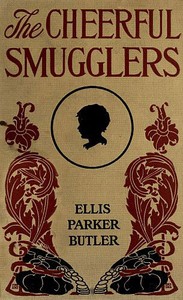
The Cheerful Smugglers — Story, Setting & Ideas
(0 User reviews)
1097
Project Gutenberg
2008
Not confirmed
Humorous stories; Family life -- Fiction; Saving and investment -- Fiction
Readers of public-domain and historical texts
Project Gutenberg digital edition
en
Edition facts
Words
32,037
Reading time
140 min
Text sections
4
Before opening The Cheerful Smugglers — Story, Setting & Ideas, the edition data offers a quick orientation: 32,037 words, 2 hr 20 min estimated reading time, and 4 detected text sections.
The text analysis averages about 14.9 words per sentence, while the detected sections provide another way to judge how the source is divided.
Project Gutenberg metadata also associates the work with “Humorous stories,” connecting these edition facts with the source record’s subject description.
Source:
Project Gutenberg record #27317
In Ellis Parker Butler's 1908 comic novel, the Fenelby family imposes a domestic tariff on all goods entering their home to fund baby Bobberts' education. The narrative follows their increasingly absurd attempts to enforce the tax, with family members turning amateur detectives to catch each other smuggling. Butler's light, conversational voice and brisk pacing turn a simple household joke into a sustained satire of protectionist policy.
Read the complete public-domain text at its original source.
Read on Project GutenbergThe Fenelby family's domestic tariff begins as a clever financial scheme: a duty on every item brought into the house, with proceeds going to baby Bobberts' college fund. Ellis Parker Butler sustains this premise through a narrative voice that treats the absurd rule with deadpan seriousness, mimicking the language of trade policy while describing household transactions. The opening chapter establishes the tone through Fenelby's reasoning—"an indirect tax, just as this nation pays its taxes"—and the family's earnest enforcement. Butler's prose moves briskly, alternating between explanatory passages and dialogue that reveals character through their reactions to the tariff. The humor derives not from slapstick but from the gap between the grandiose economic framework and the mundane items being taxed: pennies, cigars, shirt-waists.
Voice and the Domestic Economist
Butler's narrator adopts the measured, explanatory tone of a policy advocate, even when describing the most trivial household events. Fenelby's tariff is introduced with the same gravity a statesman might give to national legislation: "What was needed in the Fenelby family was a system that would save money for Bobberts gently and easily." The voice never winks at the reader; it treats the tariff as a serious solution, which amplifies the comedy. When Mrs. Fenelby discovers Bridget smuggling liquor, she laments not the betrayal but the lost duty: "liquor is a luxury, and pays thirty per cent." This consistent application of economic logic to domestic life creates a sustained satirical effect. The narrator's calm, analytical descriptions contrast with the increasingly frantic actions of the characters, who begin spying on one another to enforce the tax.
Pacing and the Amateur Detective
The middle chapters shift from exposition to a more active, scene-driven pace as Billy Fenelby volunteers to detect smuggling. Chapter VII, "The Amateur Detective," slows time to emphasize the tedium of surveillance: "There is nothing so helpless as a detective who can't work at his business of detecting." Butler uses this pause to build anticipation, then releases it with Kitty's appearance "with all the brazen effrontery of a hardened criminal." The pacing mirrors the structure of a farce, where delays heighten the payoff. The narrative also accelerates through quick cuts between characters—Billy watching the door, Kitty in the kitchen, Mrs. Fenelby discovering Bridget's flask—creating a rhythm of suspicion and revelation. The word count (32,037) suggests a compact novel, and the pacing reflects this economy: each chapter advances the tariff joke while introducing new complications.
Recurring Details and the Material World
Butler anchors the comedy in specific, tangible objects: the pottery pig bank, the box of cigars, the pink shirt-waist. These items are not merely props but evidence in the family's tariff enforcement. Billy makes "mental note" of Kitty's garments for future comparison; the cigar box is described with precision—"an oblong package, sharply rectangular in shape"—as if it were a piece of contraband. The narrator's eye for detail extends to the physical comedy of unpacking trunks "so quickly or so recklessly" that the act becomes a performance. These recurring material details ground the abstract tariff concept in the sensory world of 1908 domestic life. The illustrations by May Wilson Preston, referenced in the list of illustrations, likely emphasize these objects and the characters' interactions with them, reinforcing the visual humor of the text.
Readers will find the humor sharpest when they attend to the gap between the narrator's earnest policy language and the trivial items being taxed. Butler's novel rewards attention to its structure: the tariff rule is introduced, tested through detection, and eventually pushed toward reform. The excerpts suggest a tight, farcical plot that never abandons its central conceit. Approach the book as a sustained comic exercise in applied economics, where every purchase becomes a political act and every family member a potential smuggler.
Some evenings, I find myself thinking back to the Fenelby family’s fussy customs house, how their grand scheme shrank into something small and funny about home. That same warmth lingers in The Putnam Tradition — Reading Companion, which felt less like a guide and more like sitting beside a friend who remembers. It made Butler’s joke feel oddly tender.
There are no reviews for this eBook.
There are no comments for this eBook.
Reader reflection
How did this book work for you?
Your answers remain private and are stored only in this browser.
Your progress
0
/
10
2
What was your overall reaction to the book?
3
How likely are you to recommend this book?
4
How much effort did this book require?
5
Did anything about the book feel genuinely new?
6
Did the book deliver what you hoped for?
7
Which aspect of the book did you value most?
8
Would you read this book again?
9
Which lesson or insight stayed with you?
10