Young Readers & Adventures — Reader’s Shelf
This category collects works written for or about young people, often featuring adventure, humor, and moral growth. The settings range from rural Indiana to the Erie Railroad, from a Plattsburg military camp to a family's domestic tariff scheme. The common element is a youthful protagonist who navigates challenges—school, work, family, or travel—often with a mix of mischief and resourcefulness. These books are not exclusively for children; many, like The Hoosier School-boy, reward adult readers with period detail and social observation.
The Hoosier School-boy
Edward Eggleston's 1883 novel follows Jack Dudley through schoolyard games and domestic negotiations, using period-specific slang and detailed descriptions of games like 'three old cat.' It is recommended for its vivid portrayal of 19th-century Hoosier life and its unsentimental view of childhood.
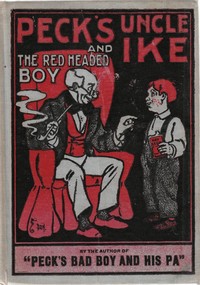
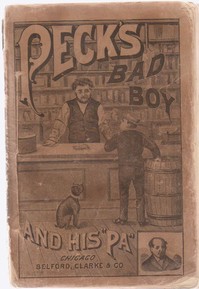
Peck's Bad Boy and His Pa 1883
George W. Peck's comic sketches offer a mischievous boy's pranks on his father, mixing slapstick, dialect, and domestic chaos. The humor relies on the father's gullibility and the boy's narrative voice, making it a useful example of period comic writing for young readers.
The Erie Train Boy
Horatio Alger's novel about a young newsboy on the Erie Railroad exemplifies the rags-to-respectability formula. The editorial note examines how Alger constructs character through speech patterns and narrative voice, offering insight into popular 19th-century children's literature.
This category differs from Sea Voyages & Shipwrecks in that the adventures are usually land-based and domestic. It overlaps with Exploring Wars, Revolutions & Nations through works like At Plattsburg, which follows a young man's military camp experience, but the focus here is on the protagonist's personal growth rather than the political context. The classification limitation: some works with young protagonists, like Virginia of Elk Creek Valley, are placed in the society category because their central concerns are social rather than adventurous.