1

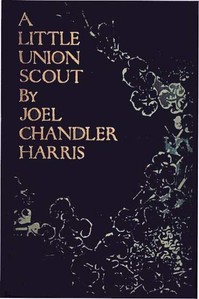
A Little Union Scout — Context and Discussion
11
1
Project Gutenberg
2007
United States -- History -- Civil War, 1861-1865 -- Juvenile fiction; Soldiers -- Juvenile fiction; African Americans -- Juvenile fiction
Readers of public-domain and historical texts
Project Gutenberg digital edition
en
Edition facts
Words: 38,730
Reading time: 169 min
Text sections: 4
Source:
Project Gutenberg record #23871
Joel Chandler Harris frames this Civil War tale through a scrapbook discovered by a young woman, whose father—a former Confederate—recounts the adventures of Union scout Captain Frank Leroy. The opening establishes a layered narrative, blending newspaper clippings, personal memory, and a tense love story set against divided loyalties.
Editorial Edition Score
4.6/5
★★★★★
★★★★★
Calculated from edition completeness, EPUB availability, text structure and catalogue metadata. Not a user rating.
Edition quality
The novel begins not with a battle but with a scrapbook. A young woman home from college finds an old book of clippings about a Union scout named Captain Frank Leroy. The Northern papers praise him; the Southern ones call him “one of Lincoln’s hirelings.” Her father, a former Confederate soldier, is reluctant to explain why he kept it. The sight of the clippings, he says, “awoke the echoes of a hundred experiences.” This frame story sets up a layered narrative: the father’s memory, the girl’s curiosity, and the scout’s own account. The reader is immediately placed inside a story about storytelling, where loyalties are tangled and the past refuses to stay quiet.
A Frame Story That Shapes the Telling
The opening pages establish a narrative frame that colors everything that follows. The scrapbook is described as “queerly inconsistent,” with Northern and Southern papers offering opposite portraits of the same man. The father’s reaction—he sees the faces of old friends and comrades—signals that this is not a simple adventure tale but a personal reckoning. The young woman’s “insistently inquisitive” manner pushes the story forward, but the father’s hesitation reminds us that memory is selective. Harris uses this device to introduce the scout’s exploits while keeping the teller’s own loyalties ambiguous. The reader is invited to question the reliability of the account from the start.
Tense Encounters and Divided Loyalties
In a later excerpt, the narrator confronts a woman named Jane Ryder, who has just declared she hates him. The scene is charged with emotional and political tension. Jane says she hates “your principles”—she hates secession and Secessionists. The narrator, a Union scout, replies that her hate “makes no difference to me. I love her, and I’d love her if she were to cut my throat.” An older woman intervenes, suggesting the narrator might love Jane enough to join her side. His response is fierce: “if a man were to ask me that question he would receive an answer that would prevent him from repeating it in this world.” The exchange reveals how personal relationships are strained by the war’s divisions, and how the scout’s convictions are absolute.
The Scout’s Voice and the Question of Mesmerism
The older woman who helps the narrator find a hat also probes his state of mind. She mentions rumors that Jane Ryder is “demented” and that she can “mesmerize folks.” The narrator dismisses the idea, but the woman’s questions linger: “How would you know that you were mesmerized, and how would you help yourself?” This exchange hints at psychological manipulation or self-deception, though the excerpts do not resolve it. The narrator’s own voice wavers between confidence and dejection. He admits to a “fit of dejection” and cannot think of anything but Jane. The woman’s strange smile and her remark “Humpty-dumpty jumped over the wall!” suggest that the narrator may be more vulnerable than he believes.
Melody and Memory as Structural Cues
The frontispiece caption reads: “I drank in the melody with a new sense of its wild and melancholy beauty.” This line, placed before the story begins, signals the importance of music and mood. The father’s memory is triggered by the scrapbook, but also by the faces of friends and the echoes of past experiences. The narrative moves between action and reflection, with the scout’s own voice often pausing to describe emotional states. The “wild and melancholy beauty” of the melody may mirror the tone of the story itself—a tale of war that is as much about longing and loss as about battles. Readers should pay attention to these lyrical moments, which Harris uses to counterbalance the violence of the scout’s missions.
Harris builds his story from fragments: newspaper clippings, a father’s memory, a scout’s confession. The excerpts show a narrator caught between love and duty, and a frame that questions how any war story can be told. Readers should watch for the tension between the scout’s bold actions and his inner turmoil, and for the way the older woman’s questions about mesmerism hint at forces beyond the narrator’s control. The novel rewards attention to its layered structure and to the moments when the narrative pauses to reflect on its own telling.
Reader reflection
What was your reading experience?
Capture what you thought, learned, and would like to remember.
Your progress
0
/
10
2
How much did you enjoy the reading experience?
3
Is this a title you would suggest to others?
4
Did the language feel accessible?
5
Which element worked best for you?
6
How original did the book feel?
7
Did the book meet your expectations?
8
How would you describe its reading pace?
9
What changed or sharpened your thinking?
10