1

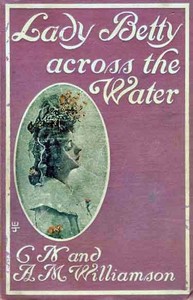
Lady Betty Across the Water — A Reader’s Guide
14
1
Project Gutenberg
2007
Young women -- Fiction; British -- United States -- Fiction; Voyages and travels -- Fiction
Readers of public-domain and historical texts
Project Gutenberg digital edition
en
Edition facts
Words: 99,074
Reading time: 431 min
Text sections: 9
Source:
Project Gutenberg record #23441
An editorial note on how the opening, middle, and later excerpts of 'Lady Betty Across the Water' guide a first reading, focusing on the narrator's voice, cultural contrasts, and episodic structure.
Editorial Edition Score
4.8/5
★★★★★
★★★★★
Calculated from edition completeness, EPUB availability, text structure and catalogue metadata. Not a user rating.
Edition quality
The narrator of Lady Betty Across the Water announces herself through a distinctive, confiding voice: she is “excited—more excited than I’ve ever been in my life,” and she intends to write down everything “exactly as it’s happened.” This opening establishes a first-person diary-like format that structures the entire novel. The reader is immediately placed inside Betty’s perspective, sharing her uncertainty about being “banished” to America. The early pages reveal a young woman who observes her mother’s reactions closely and who uses writing to clarify her own feelings. This intimate, present-tense narration invites the reader to experience events alongside Betty, without the filter of hindsight.
A Voice That Confides and Comments
From the first paragraph, Betty’s narration feels like a private conversation. She compares her excitement to the time her governess “had hysterics in the schoolroom and fainted among the tea things”—a specific, slightly comic image that signals her eye for the absurd. Throughout the excerpts, she maintains this tone: she is self-aware, sometimes flustered, but always eager to share her reactions. When faced with the daring American bathing costume, she stammers, “I can't see myself wearing it. That is, I can't bear to think of anyone else seeing me wear it.” The humor comes from her genuine distress, which her American friend Sally gently teases. This voice gives the reader a consistent, engaging guide through unfamiliar social terrain.
Cultural Contrasts as Comedy
The excerpts repeatedly highlight the gap between English and American customs. Betty’s shock at the bathing dress—a “pale green” two-piece with “long stockings” in one piece—is played for laughs, but it also reveals deeper differences in attitudes toward propriety and fashion. Sally’s casual “Why, you funny child, it's your bathing dress” underscores how natural such attire seems to an American. Similarly, Betty’s surprise at the cadets’ friendliness (“I found myself chatting away with those cadets as if I had grown up with them”) points to a more informal American social code. These moments are not merely decorative; they drive the plot, as Betty must navigate a world where her English reserve is constantly challenged.
Episodic Structure and the Diary Form
The table of contents reveals a novel built around titled chapters such as “About Crossing the Water,” “About New York,” and “About West Point and Proposals.” Each chapter promises a discrete episode, much like diary entries. The excerpts confirm this: Betty recounts events in sequence, with clear transitions between scenes. The bathing-dress episode, for instance, unfolds in real time, with dialogue and description interwoven. This structure makes the novel easy to follow in short sittings, as each chapter offers a self-contained adventure. The diary conceit also allows for direct commentary on American life, as Betty reflects on what she sees—from sky-scrapers to country folk—without needing a broader narrative framework.
The Reader as Fellow Traveler
Because Betty writes as events happen, the reader shares her uncertainty. She does not know whether she is “pleased or not” about her banishment, and she cannot predict how Americans will react to her. This creates a sense of immediacy: we learn about New York, West Point, and Newport at the same pace she does. The excerpts also show Betty’s growth in small ways—she becomes more comfortable with American directness, even as she retains her English perspective. The reader is positioned as a confidant, someone Betty addresses directly through her written account. This technique makes the novel feel personal and engaging, as if we are reading over her shoulder.
For a first reading, pay attention to how Betty’s voice shifts—or remains steady—as she encounters new people and places. The diary format rewards readers who enjoy episodic travel narratives and light social comedy. Because the excerpts cover only the early and middle portions, the later chapters may introduce complications not hinted at here, such as the “disaster” mentioned in Chapter XII. Let Betty’s own curiosity guide you: she is as eager to discover America as the reader is to discover her story.
Reader reflection
Record your reading impressions
A brief reflection can help important ideas stay with you longer.
Your progress
0
/
10
2
How much did you enjoy the reading experience?
3
Would you encourage someone else to read it?
4
Did the language feel accessible?
5
Is this a title worth rereading?
6
Did it raise ideas you would like to talk about?
7
How did the reading compare with what you expected?
8
How would you rate its originality?
9
Which lesson or insight stayed with you?
10