1

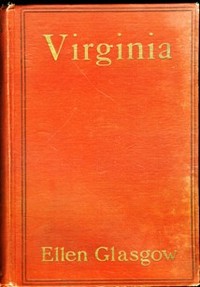
Virginia — Context and Discussion
14
2
Project Gutenberg
2008
Women -- Fiction; Virginia -- Fiction; Marriage -- Fiction; Wives -- Fiction
Readers of public-domain and historical texts
Project Gutenberg digital edition
en
Edition facts
Words: 151,886
Reading time: 661 min
Text sections: 13
Source:
Project Gutenberg record #26316
Ellen Glasgow's 1913 novel traces Virginia Pendleton's life from her 1884 Dinwiddie girlhood through marriage to playwright Oliver Treadwell, examining the tensions between domestic devotion and artistic ambition, and the painful gap between a wife's selfless love and a husband's evolving priorities.
Editorial Edition Score
4.8/5
★★★★★
★★★★★
Calculated from edition completeness, EPUB availability, text structure and catalogue metadata. Not a user rating.
Edition quality
The opening scene of Ellen Glasgow's Virginia introduces Miss Priscilla Batte on the porch of the Dinwiddie Academy for Young Ladies, feeding a canary in its cage—a detail that quietly echoes the constrained lives of the women in this novel. The year is 1884, and the air is thick with syringa blossoms and the weight of a system that shapes its female pupils for a single destiny. Glasgow's prose is precise and unhurried, building a world where a woman's education is measured by lessons in physical geography and her future by the marriage she will make.
The System and Its Inheritors
The novel's first chapter is titled "The System," and Glasgow wastes no time in establishing the social machinery that governs her characters. Miss Priscilla Batte, with her cameo of Pallas Athene and her three-cornered cap, embodies an education that prizes gentle obstinacy over intellectual reach. The canary's "involuntarily celibate life" is a small but telling image: the women of Dinwiddie are trained for a narrow sphere, their desires and ambitions caged by expectation. Virginia Pendleton, the heroine, inherits this system not as a rebel but as its most devoted product. Her mother treasures the fact that the rector could read his Bible at age four—a detail that speaks to a culture where piety and early literacy are the highest marks of a child's promise. Glasgow's irony is subtle but persistent: the system that prepares Virginia for love and marriage will leave her ill-equipped for the changes that follow.
Letters and the Distance Between
Glasgow uses correspondence to expose the growing chasm between Virginia and her husband, Oliver. When Oliver is away in New York, Virginia reads his scrawled note about spending "every minute of his time at the theatre" and feels only pity for him—"Poor fellow, it's dreadfully hard on him, isn't it?"—with no hint of compassion for herself. Her thoughts turn to Harry's reading lesson and the scalloped oilcloth she is laying on storeroom shelves. The contrast is stark: Oliver is immersed in the world of art and commerce, while Virginia's universe contracts to the nursery, the pantry, and the crock of blackberry jam. Glasgow does not editorialize; she simply sets these details side by side. The reader sees what Virginia cannot: that her husband's work is becoming the center of his life, and that her own devotion, however genuine, is no longer enough to hold him. The novel's structure, moving from "The Dream" to "The Reality," is foreshadowed in these small, accumulating disconnections.
The Texture of Domestic Life
Glasgow's attention to physical detail gives the domestic world a weight that is both tender and oppressive. Virginia's hands are never idle: she lays strips of white oilcloth, scallops edges, reaches for the crock of jam. The fire-lit nursery, with Lucy crooning to her doll and the sound of a blind beggar's stick tapping on the pavement, is rendered with a precision that makes the scene almost tactile. Yet Glasgow also notes the isolation within that warmth: "that little centre of red firelight separated her as completely from the other twenty-one thousand human beings among whom she lived." The novel is interested in the price of comfort—the way a woman's whole existence can become a single room, a single set of affections. The mother instinct is present, but so is the pang of motherhood, as one of the later chapter titles suggests. Glasgow does not sentimentalize; she observes, and the observation carries its own quiet force.
Readers attentive to Glasgow's method will notice how often she lets a single object—a canary cage, a cameo brooch, a scalloped oilcloth—carry the weight of a character's entire world. The novel rewards a slow, patient reading that lingers on these details. Pay particular attention to the letters and the spaces between them; they are the novel's most revealing documents. And note how the narrative voice, though sympathetic, never fully enters Virginia's consciousness—a distance that becomes its own kind of commentary.
Reader reflection
Your personal reading reflection
Build a private reading journal entry for this title.
Your progress
0
/
10
2
How did the book work for you overall?
3
Would you pass this book on to a friend?
4
How easy was the book to follow?
5
Did anything about the book feel genuinely new?
6
Did the story or argument move comfortably?
7
Would this book work well in a reading group?
8
How clearly were the main ideas presented?
9
Which lesson or insight stayed with you?
10